FROM PENCIL
TO STRUCTURE
THIRTY YEARS OF PENCIL JOINERY. NOT ONE NAIL.
THE PHILOSOPHY
We built our first pencil shed in 1992, as a folly. We sourced 6,000 condemned HB pencils from a stationery wholesaler in Leeds, we spent three weekends working out how to join them, and we put up a 1.8 × 2.4m structure in a Harrogate back garden. It stood. It still stands.
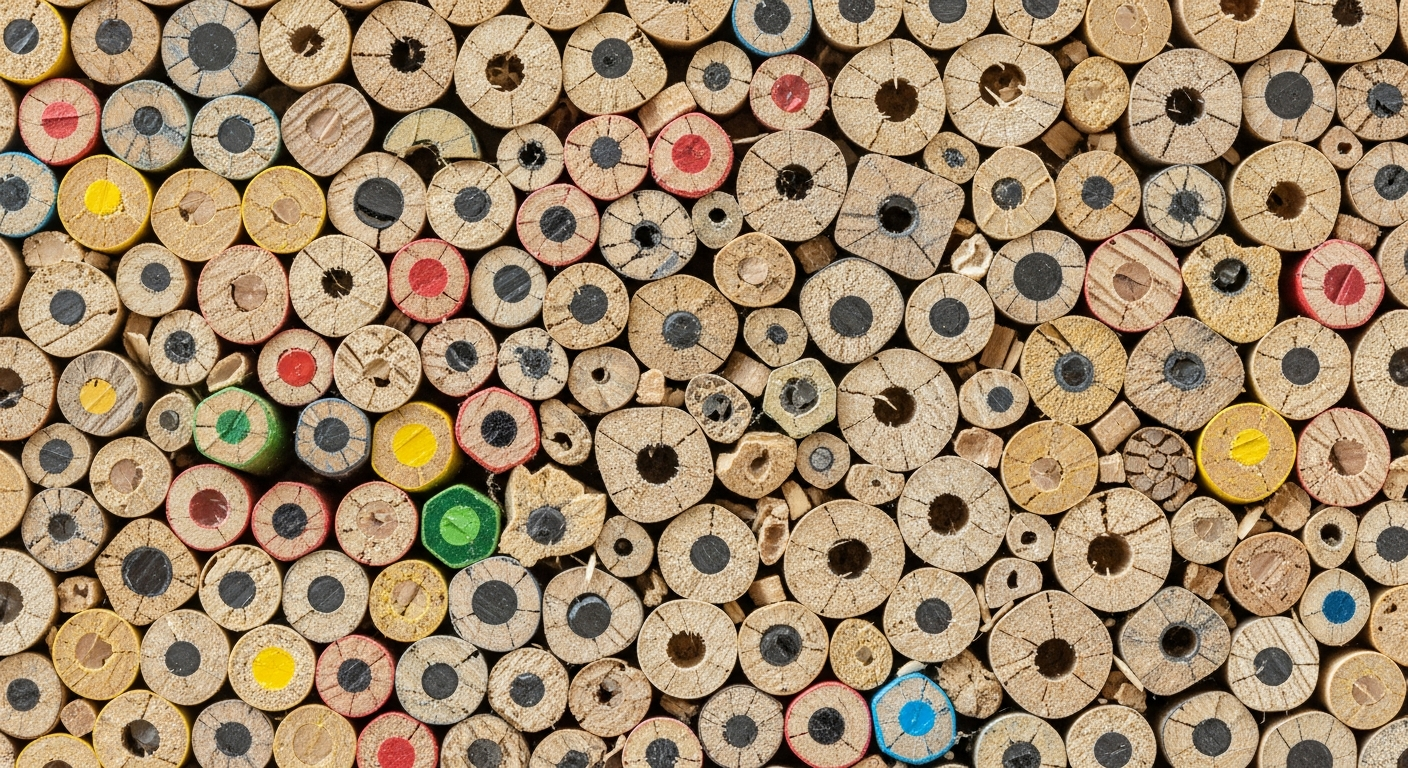
Thirty-two years later, the principles have not changed. We do not use nails, screws or adhesive in our primary structural pencil work. The pencils hold each other through geometry, compression and a joinery system we call the Pencil Notch — a variation on the saddle-notch joint used in American log cabin construction, adapted for the cylindrical form of a pencil.
The pencil is not a metaphor for anything here. It is a structural member. It is a beautiful structural member. That is the point.
SOURCING & GRADING
We source reclaimed pencils from schools, colleges, offices and pencil manufacturers across the UK. Every pencil is graded for straightness (tolerance ±0.3mm over 180mm), lacquer condition and wood integrity. Roughly 30% of sourced stock is rejected at this stage.
SORTING BY SPECIFICATION
Approved pencils are sorted by grade, colour and species. Cedar and basswood perform differently in outdoor conditions — cedar is preferred for roof work; basswood for interior panels and decorative features. Graphite core diameter varies by grade and affects joint depth.
FOUNDATION AND FRAME
The foundation is conventional: a concrete pad or screw-pile base, depending on the site. The primary frame — corner posts, plate and ridge — is built from traditional hardwood timber. The pencil work is non-structural for the frame, but provides all wall and roof enclosure.
PENCIL NOTCH JOINERY
Each pencil is CNC-notched at our Harrogate workshop before dispatch to site. The Pencil Notch is cut to ±0.05mm tolerance — this precision is what allows compression-fit assembly without adhesive. Our notching software calculates joint depth for each pencil's actual diameter (pencils are not perfectly uniform).
WALL RAISING
Wall construction proceeds course by course, with each horizontal run locked to the previous by the notch. No temporary fixings are used during construction — the geometry is self-supporting from the third course. A standard Classic wall rises at roughly 200 pencils per hour with two builders.
SEALING AND WEATHERPROOFING
Once the structure is complete, all external pencil surfaces are treated with our Pencilshed Formula — a blend of beeswax, raw linseed oil and pine resin developed in 1998. Applied hot by brush, it penetrates the cedar grain and lacquer, creating a weather seal rated to 15 years without re-treatment. Interior surfaces are left untreated.
MATERIALS
We use only reclaimed pencils. No new pencils are manufactured for Pencil Shed construction. This is an ethical position as much as a practical one — reclaimed stock is more consistent (factory seconds are pre-dried and aged) and diverts material from landfill.
Annual sourcing: approximately 400,000 pencils. Suppliers include schools, universities, NHS trusts, local authorities and three UK pencil manufacturers.
STRUCTURAL LIFE
Our 1992 prototype shed remains standing and in use. Based on that structure and the material science of cedar and basswood, we conservatively rate Pencil Shed structures at 40–60 years with standard maintenance.
The primary failure mode is at the foundation, not the pencil structure. We specify a 40-year concrete pad as standard. The pencils will outlast almost everything else in your garden.
Sourcing 400,000 reclaimed pencils a year takes a workshop and three decades of supplier relationships. Most people attempting a course of Pencil Notch walling at home will be buying new. Below is what our own workshop reaches for — not reclaimed, but the same materials, for anyone mad enough to try a course of their own.
AS AN AMAZON ASSOCIATE WE EARN FROM QUALIFYING PURCHASES.